
Collaborative projects with JICA
Collaboration with JICA
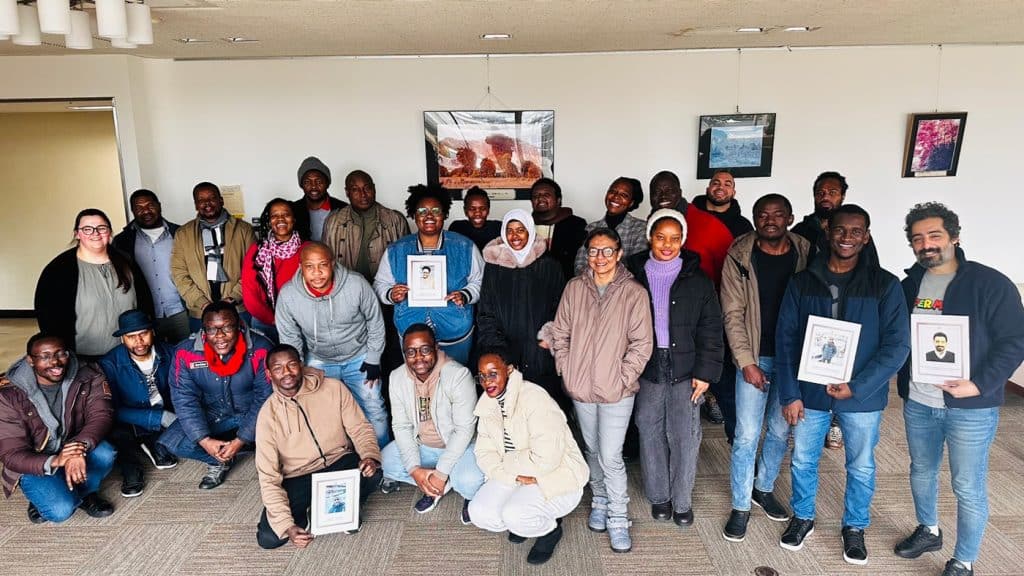
In March 2021, our university signed a memorandum of understanding with the Japan International Cooperation Agency (JICA) Tokyo Center to promote collaboration.
Niigata University and JICA have had many long-standing collaborations, including faculty members participating as experts in JICA projects in fields such as medicine and disaster prevention, and the university accepting foreign trainees invited by JICA. In particular, since 2019, we have launched a program to accept international students from developing countries on JICA scholarships, and through this program, students from African countries are studying at Niigata University's Graduate School of Science and Technology.
The Graduate School of Modern Society and Culture and the Graduate School of Science and Technology were established as the Graduate School of Integrated Arts and Sciences in April 2026, and we will continue to deepen collaboration between the two schools to foster human resources who will contribute to the international and local communities.
Related Departments
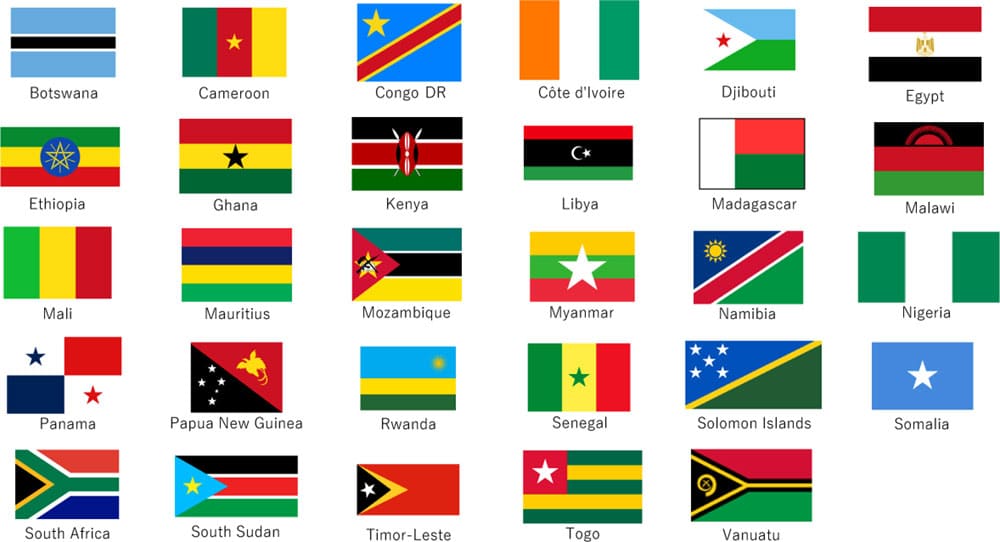
Countries and regions of origin of JICA trainees
JICA Student Home Countries
As of April 2025, 19 JICA trainees are studying at the Graduate School of Integrated Arts and Sciences (Master’s Program of Sciences and Technologies).
There are 19 JICA students in the Graduate School of Integrated Arts and Sciences(Natural Sciences).(As of April 2025)
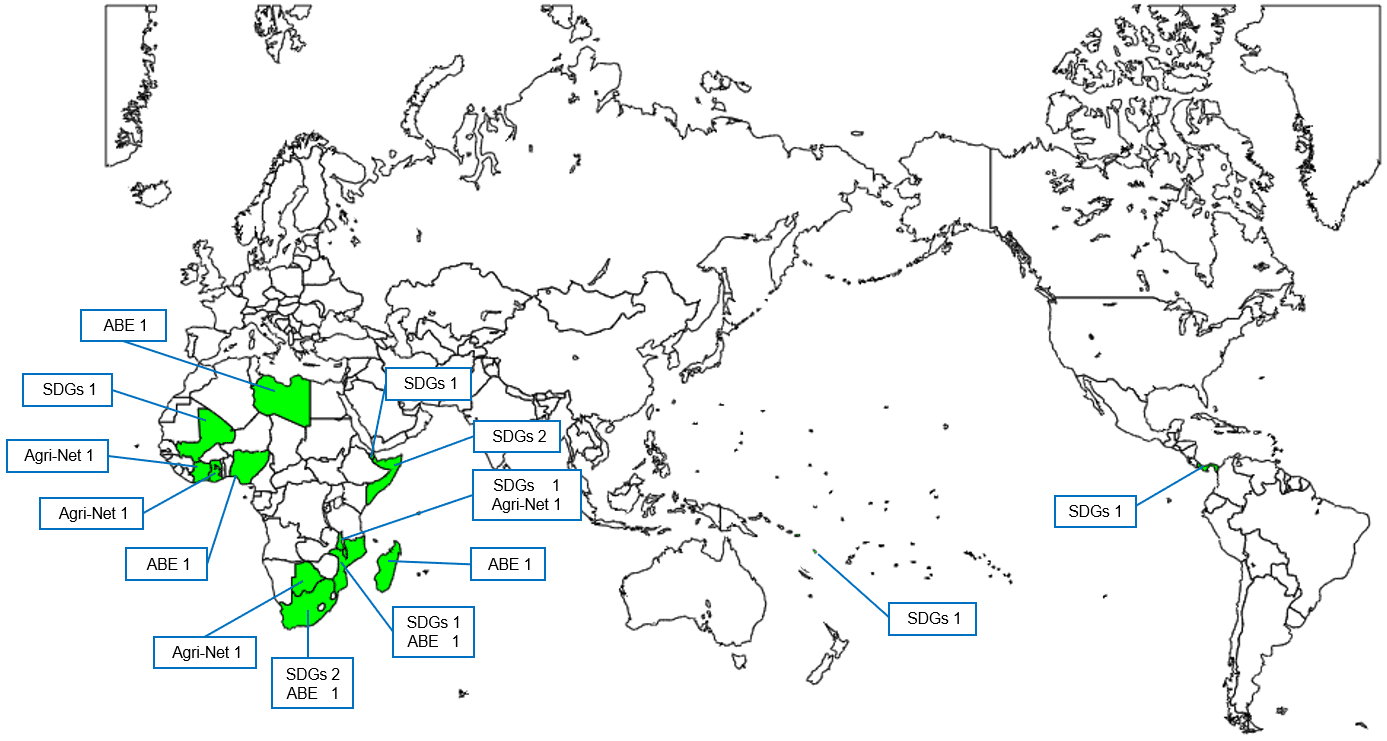
JICA Long-Term Training Programs
- Agriculture Studies Networks for Food Security (Agri-Net)
- Master's Degree and Internship Program of African Business Education Initiative for Youth (ABE)
- SDGs Global Leader (SDGs)
Number of JICA trainees
Number of JICA Students
| Graduate School of Science and Technology ~Doctor's Program~ | |||
|---|---|---|---|
| Process | Course | Current Enrollment as of April 2026 | |
| Number of Students | Numbers by JICA Programs | ||
| Fundamental Sciences | Physics | 0 | – |
| Chemistry | 0 | – | |
| Mathematical Science | 0 | – | |
| Advanced Materials Science and Technology | Materials Science and Technology | 0 | – |
| Applied Chemistry and Chemical Engineering | 0 | – | |
| Advanced Mechanical Science and Engineering | 0 | – | |
| Mobile Systems Engineering | 0 | – | |
| Electrical and Information Engineering | Information Engineering | 0 | – |
| Electrical and Electronic Engineering | 0 | – | |
| Human Sciences and Assistive Technology | 0 | – | |
| Life and Food Sciences | Life Sciences | 0 | – |
| Applied Life and Food Sciences | 1 | 1 (SDGs) | |
| Agriculture and Bioresources | 0 | – | |
| Sakeology | 0 | – | |
| Environmental Science and Technology | Natural Environmental Science | 0 | – |
| Environmental Science for Agriculture and Forestry | 4 | 1 (Agri-Net) 3 (SDGs) | |
| Architecture and Civil Engineering | 0 | – | |
| Earth Science | 0 | – | |
| Natural Disaster and Environmental Science | 0 | – | |
| Field Research in the Environmental Sciences | 0 | – | |
| Total | 5 | 1 (Agri-Net) 4 (SDGs) | |
| Graduate School of Integrated Arts and Sciences ~Master's Program~ (opening from 2026) | |||
|---|---|---|---|
| Process | Course | Current Enrollment as of April 2026 | |
| Number of Students | Numbers by JICA Programs | ||
| Humanities and Social Sciences | Arts and Humanities | 0 | – |
| Social Sciences | 0 | – | |
| Anime and Visual Media Resources Sciences | 0 | – | |
| Sakeology | 0 | – | |
| Sciences and Technologies | Advanced Materials and Fundamental Sciences | 0 | – |
| System Creation Science | 0 | – | |
| Life, Environment and Food Science | 3 | 1 (SDGs) 2 (Agri-Net) | |
| Anime and Visual Media Resources Sciences | 0 | – | |
| Sakeology | 0 | – | |
| Information and Social Design Science | 0 | – | |
| Interdisciplinary Science and Technology for Carbon Neutral | 0 | – | |
| Field Research in the Environmental Sciences | 0 | – | |
| Human Brain and Health Sciences | 0 | – | |
| Total | 3 | 1 (SDGs) 2 (Agri-Net) | |